


Your toddler has a tablet, a TV, and somehow still manages to find your phone. Sound familiar? Here’s the thing most parenting content won’t tell you: the problem isn’t screen time itself. It’s that most screen-free alternatives feel like a science project that takes longer to set up than your kid actually plays with it.
Searches for “screen-free activities” are up 200% year over year, yet parents keep landing on elaborate, Pinterest-worthy setups that require dyed chickpeas and a dedicated craft room. There’s a better way.
The activities in this guide are low-effort, genuinely engaging, and built around how toddlers actually learn, not how they look on Instagram. No glitter. No craft degree required.
Here’s what we’re covering:
- Sensory and hands-on play activities that build real cognitive skills
- Age-appropriate activities by developmental stage (1-2 vs. 2-3 year olds)
- Easy indoor activities using stuff you already own
- Outdoor and movement-based play ideas for burning energy
- How to turn everyday routines into learning moments
- How to build a weekly screen-free activity rhythm your toddler will actually look forward to
At Life Learning Academy in Miramar, FL, screen-free, hands-on learning is just how every day runs. The curriculum is built around active exploration, creative play, and real skill-building because that’s what toddlers genuinely thrive on. If you’re curious about what that looks like inside a classroom, their toddler daycare program is worth a look.
Sensory Play That Secretly Teaches Everything
Here’s something most parents don’t realize: when your toddler is squishing Play-Doh or dumping rice into a bowl, they’re not just making a mess. They’re building their brain.
More than one million new neural connections form every second in the early years. Sensory play is one of the fastest ways to trigger that process. According to Michigan State University Extension, sensory play is the foundation of all skills children will eventually use in school, including reading, writing, and solving math and science problems.
And the science backs the mess. A 2024 study following 2,400 children across twelve countries found that children in multi-sensory learning environments showed 34% better engagement and retention compared to single-sense approaches.
What Skills Does It Actually Build?
Each type of sensory activity targets something specific:
| Activity | Skill Being Built |
|---|---|
| Sorting beans or pasta | Early math, fine motor, focus |
| Pouring water between containers | Spatial reasoning, cause-and-effect |
| Squishing Play-Doh or clay | Hand strength, pre-writing readiness |
| Feeling different textures | Sensory processing, vocabulary |
| Mixing colors in a bin | Observation, early science thinking |
Easy Setups That Actually Work
Skip the Pinterest pressure. These take under five minutes:
- Sensory bin: A container filled with rice, dried beans, or sand. Add scoops, cups, and small toys.
- Texture walk: Line up surfaces around the house (carpet, tile, towel, bubble wrap) and let them explore barefoot.
- Water pouring station: Two plastic cups, a small pitcher, and a towel underneath. Done.
Rotate the bin’s contents weekly. Novelty keeps toddlers engaged longer and introduces new textures without buying anything new.
At the Life Learning Academy toddler program, hands-on sensory exploration is woven into the daily curriculum. It’s not a scheduled activity. It’s just how learning happens there.
Activities by Age: 1-2 vs. 2-3
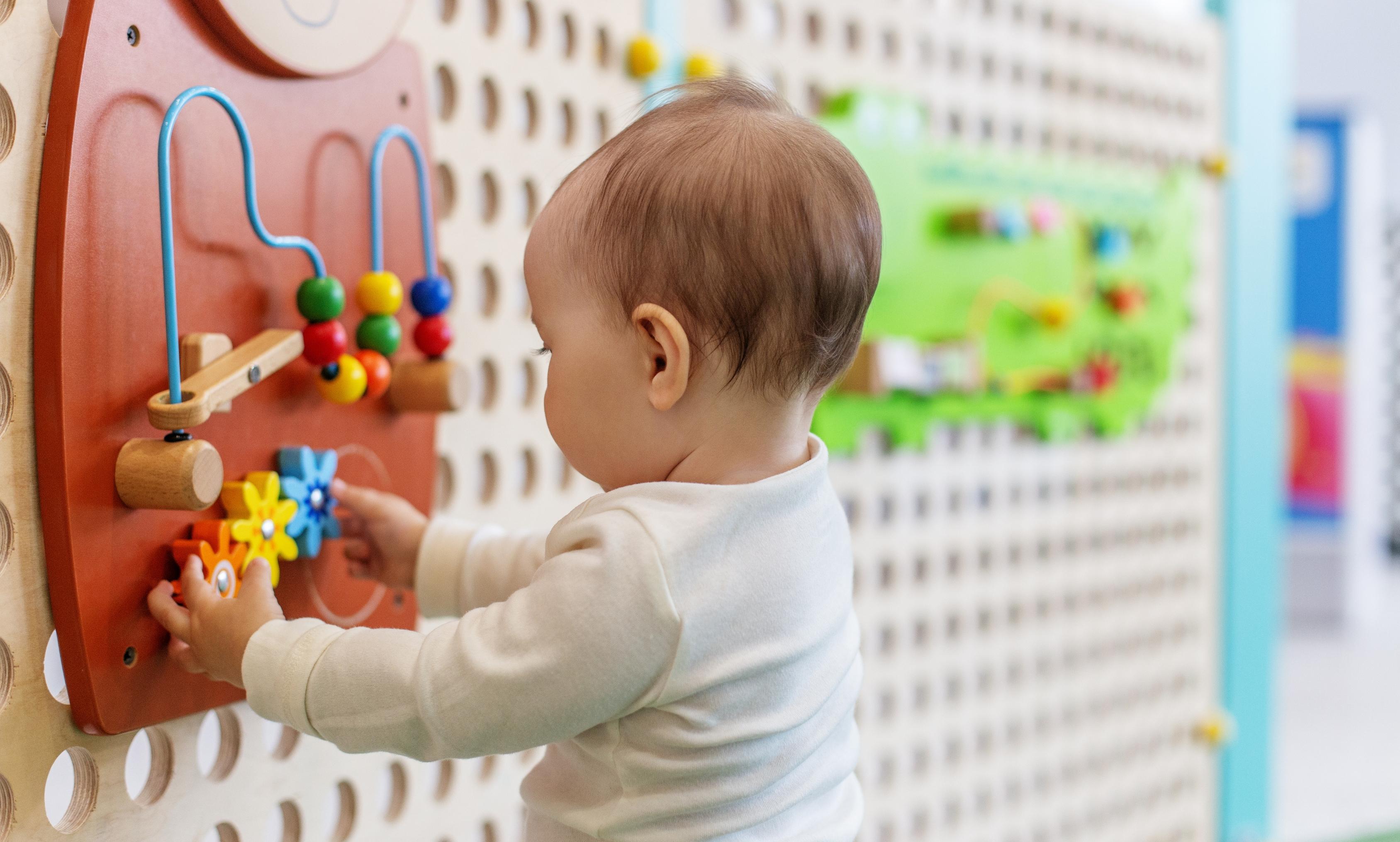
Not all toddler activities are the same. A busy toddler at 14 months is working on completely different skills than one at 30 months. Match the activity to where your little one actually is developmentally, and you’ll get longer engagement, less frustration, and real learning happening.
Ages 1-2: Explore First, Think Later
At this stage, your child is all about sensory input and basic motor skills. Babies and young toddlers between 12-16 months learn best through activities like obstacle courses built from cardboard box setups or furniture, noisy shakers made from containers, and finger foods they can pick up and feel. Keep it simple and repetitive.
Best activities for 1-2 year olds:
- Pom poms + muffin tin: Grab a big spoon or let them use their fingers to drop pom poms into each cup. It builds fine motor skills and early sorting concepts.
- Tape pull: Stick strips of painter’s tape to a hard floor or low table. Peeling it off is surprisingly absorbing and great for hand strength.
- Shake and roll: Fill a sealed container with dried pasta and let them shake, roll, and listen. Cause-and-effect in its simplest form.
- Texture baskets: Gather a few safe household materials with different textures (a sponge, a wooden spoon, a fabric scrap) and let them explore freely.
Ages 2-3: Now They Want to Do Things
By age two, toddlers begin imitating adults and older kids, following two-step instructions, and showing early problem-solving skills like using a stool to reach something. They’re ready for activities with a little more structure and a clear outcome they can see.
Best activities for 2-3 year olds:
- Painter’s tape roads and shapes: Put tape on the floor to create shapes, letters, roads, or a simple game board. Let them drive toy animals or cars along the lines, or practice jumping from shape to shape.
- Colored water pouring: Fill a few cups with colored water (a few drops of food coloring in water does the trick) and give them measuring cups to pour and mix. They practice hand-eye coordination and learn that colors mix into new ones.
- Popsicle stick puzzles: Draw a simple picture across several popsicle sticks and mix them up. Putting it back together builds logic and focus.
- Cardboard box pretend play: A cardboard box becomes a car, a kitchen, a spaceship. Hand them colored paper and tape, and let their creativity take over.
Pro tip:Two-year-olds love copying adults. If you want them engaged, do it with them first and then step back. They’ll keep going on their own.
Easy Indoor Activities You Already Own
You don’t need to order anything. The best educational activities for toddlers are probably sitting in your kitchen right now.
The Painter’s Tape Toolkit
Painter’s tape is one of the most versatile materials in any toddler activity setup. Here’s what you can do with a single roll:
- Stick it to the floor in a grid and use it as a simple game board
- Create a balance beam line across the hallway
- Make shapes on a window and have them trace with their finger
- Border off a “workspace” on the floor so your little one knows where to play
The windows double as a canvas, too. Tape colored paper shapes to the glass and let sunlight do the rest.
Kitchen Supplies as Learning Tools
Your kitchen is basically an activity store you’ve already paid for. These setups take under three minutes:
| Supply | Activity | Skill Targeted |
|---|---|---|
| Muffin tin + pom poms | Sort by color into cups | Fine motor skills, color recognition |
| Measuring cups + water | Pouring at the kitchen sink | Motor skills, math concepts |
| Dried pasta + bowl | Sorting shapes by type | Tactile learning, classification |
| Dish soap + water | Bubble play in a bin | Sensory exploration, cause-and-effect |
| Wooden spoon + pots | Drumming and rhythm | Auditory processing, creativity |
Colored Water Play (Indoors)
This one earns its spot on any list of activities for toddlers. Fill a few clear cups with water and add a few drops of food coloring to each. Give your little one an empty cup and let them pour and combine.
When they mix blue and yellow and suddenly see green, their face will tell you everything you need to know about how much learning is happening. It’s so much fun, and it costs almost nothing.
Mess-proofing tips:
- Do it in the bathtub or on a towel on the floor
- Use ice trays as a contained pouring target
- Stick to just two or three colors to keep it manageable
Cardboard Box Activities
Never throw away a cardboard box again. Options include:
- Cut holes in the sides and let them post pom poms or rolled paper through
- Decorate the inside walls with colored paper and tape to create a “room”
- Flip it upside down and use it as a tunnel or a fort base
- Turn it into a pretend oven, car, or animal shelter with some tape and imagination
Outdoor Play That Burns Real Energy
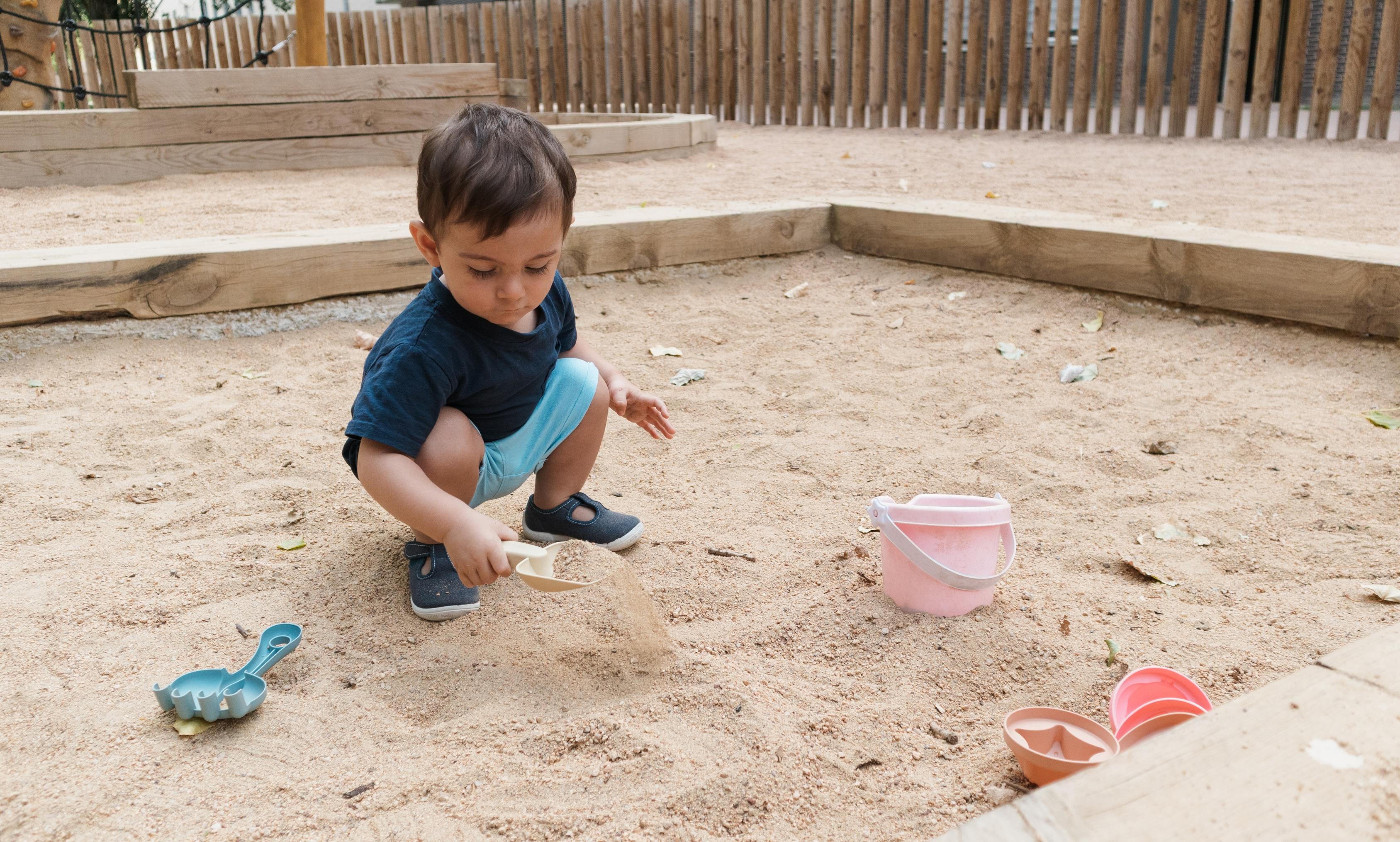
A spray bottle. Sidewalk chalk. A patch of grass. That’s all you need to turn the back door into a gateway for some of the best toddler activities around.
Chalk + Tape = Infinite Games
Sidewalk chalk is one of the few art supplies that cleans itself. Use it to:
- Draw shapes and call out which one to jump to (builds listening and gross motor skills together)
- Trace your toddler’s body outline and let them fill it in
- Draw a simple game course with start and finish lines
- Write letters and have them “erase” each one with a spray bottle
That last one pulls double duty. Spray bottle play builds hand strength (hello, fine motor skills) while the spraying motion develops hand-eye coordination. Fill it with plain water and let them go.
Movement-Based Toddler Activities Outside
Between ages 2-3, toddlers are rapidly improving their motor skills through running, jumping, climbing, and kicking. Give them structured ways to practice all of it:
- Animal walks: Call out an animal and move like it together. Bear crawl, bunny hop, crab walk. They’ll talk about animals for the rest of the day.
- Obstacle courses: Use whatever you have outside: hula hoops to jump through, sticks to step over, a towel to crawl under.
- Ball rolling games: Roll a ball back and forth with a simple rule (“roll it only to me”). A simple game like this builds focus, turn-taking, and gross motor skills.
- Nature sorting: Grab a muffin tin and send them on a nature walk to collect one item for each cup: a pebble, a leaf, a twig, a flower.
Routines Are Activities in Disguise
Here’s one most parents genuinely overlook: you’re already doing half the teaching. Everyday life, from serving food to washing hands to getting dressed, is full of natural learning moments. You just have to talk through them.
How to Turn Daily Tasks Into Learning
The key is narration. Toddlers learn how words sound even when they can’t yet say them clearly, so talking through what you’re doing matters more than most parents realize. Keep it casual. You’re not lecturing, you’re just describing.
At mealtimes:
- Name every food on the plate, its color, texture, and shape
- Let them help with serving food by passing napkins or placing cups
- Count pieces of food out loud as you put them on their plate
- Talk through what you hear, smell, or see while cooking
At bath time:
- Measuring cups and ice trays in the tub create instant water play
- Add a few drops of food coloring to the water for a colored water surprise
- Practice pouring, scooping, and filling containers to build motor skills
Getting dressed:
- Name clothing items, colors, and where they go on the body
- Let them practice pulling socks on independently
- Singing songs while getting dressed makes the routine feel like play
During cleanup:
- Sort toys into bins by color, size, or type
- Count items as they go away
- Make it a simple game: “Can you find everything red?”
Singing Songs as a Learning Tool
Never underestimate a good song. Singing songs during transitions (cleanup, car rides, mealtime) builds communication skills, memory, and emotional regulation all at once. Kids who hear more words and songs in their early years consistently show stronger language development in preschool. Songs with actions (think “Head, Shoulders, Knees and Toes”) also reinforce body awareness and coordination.
Build a Weekly Screen-Free Rhythm
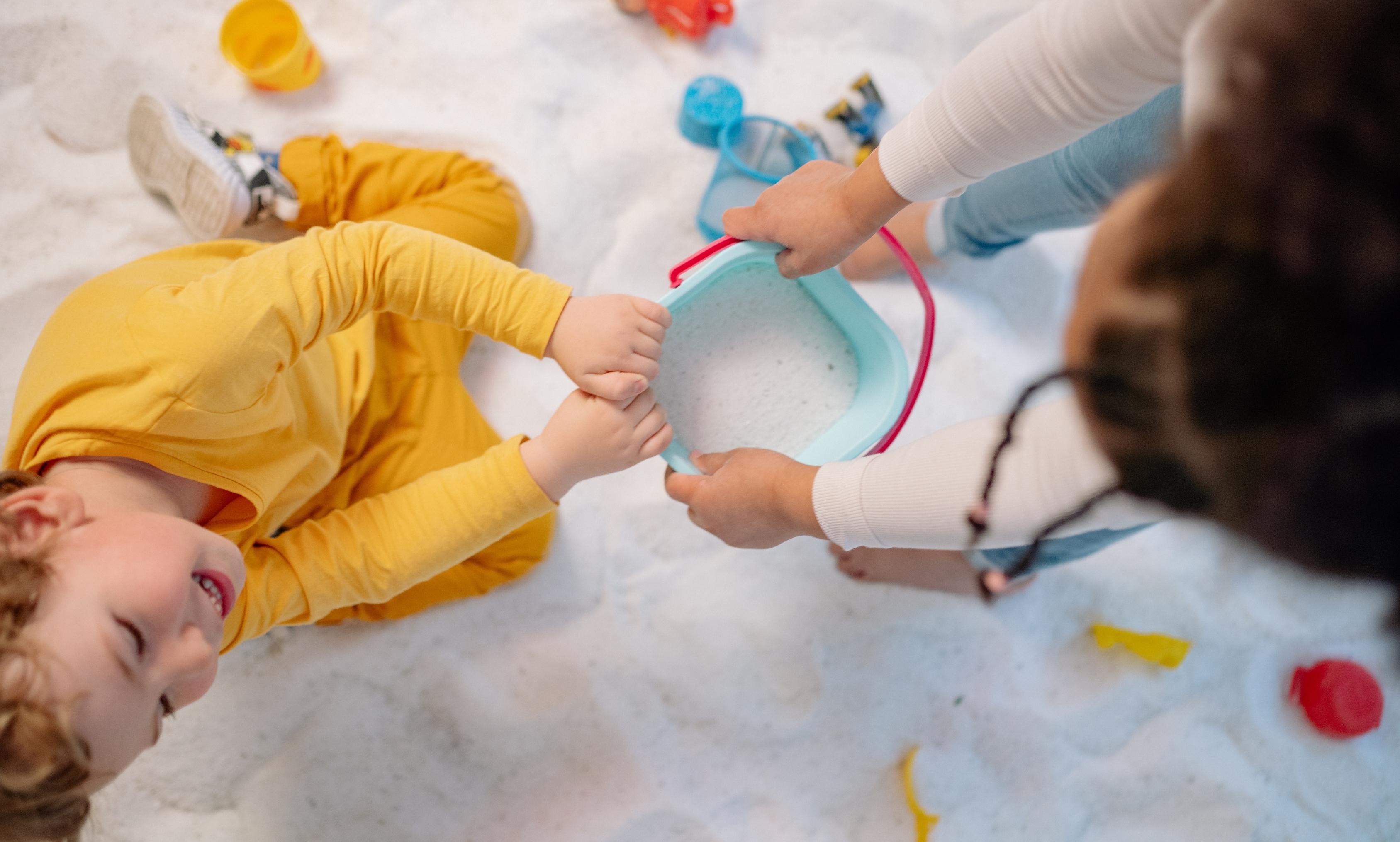
One-off activity lists are useful. A repeatable weekly rhythm your toddler actually anticipates? That’s where the real magic happens. Consistency gives your little one predictability, and predictability makes them feel safe enough to focus and explore.
Why Rhythm Beats Random
Toddlers thrive on routine because their brains are still learning to regulate. When they know “Tuesday is water play day,” they stop fighting transitions and start looking forward to them. That’s not just good for behavior. It’s good for learning.
A Sample Weekly Screen-Free Rhythm
This isn’t a rigid schedule. Think of it as a loose framework you can adapt to your week:
| Day | Theme | Sample Activities |
|---|---|---|
| Monday | Create & Build | Cardboard box builds, popsicle stick projects, tape + paper art |
| Tuesday | Water & Sensory | Colored water pouring, dish soap bubbles, ice trays, measuring cups |
| Wednesday | Move It | Outdoor obstacle course, animal walks, sidewalk chalk games |
| Thursday | Kitchen Learning | Cooking together, sorting dried pasta, muffin tin games |
| Friday | Art Day | Painting, colored paper collages, pom pom stamping |
| Weekend | Free Explore | Child-led play, nature walks, family activities |
Tips to Make It Stick
- Prep materials the night before. Even five minutes of setup means you actually follow through.
- Rotate, don’t replace. You don’t need new activities every week. Swap out the materials (different food coloring, new colored paper, different pasta shapes), and it feels brand new.
- Let them help set up. Getting your toddler involved in the prep builds anticipation and gives them ownership over the activity.
- Save what works. Keep a running note on your phone of which activities got the longest engagement. Those are your go-tos for hard days.
The week doesn’t have to be perfect. Some days, painter’s tape on the floor and a pile of pom poms is the whole plan, and that’s completely fine.
If you’d rather have a team of trained educators handling the structured learning side of things, the programs at Life Learning Academy in Miramar are built on exactly this kind of intentional, active daily rhythm.
Parents consistently note how much their kids look forward to each day there, which is about the best endorsement any preschool can get. You can also check out their thoughts on cultivating curiosity beyond the classroom for more ideas that extend learning into home life.
Screen-Free Days Start at Life Learning Academy
Screens are easy. But easy isn’t always what your toddler needs most right now. The activities in this guide are proof that the best learning tools are often a cardboard box, a strip of painter’s tape, and ten minutes of your attention.
Key takeaways to save:
- Match activities to your toddler’s developmental stage, 1-2 and 2-3 year olds need very different setups
- Sensory play builds real cognitive skills, not just keeps them busy
- Your kitchen and a roll of painter’s tape are basically a full activity kit
- Outdoor play and movement are non-negotiable for gross motor development
- Everyday routines are learning moments in disguise
- A simple weekly rhythm beats a random list of ideas every single time
At Life Learning Academy in Miramar, every single day is built around the kind of hands-on, screen-free learning this entire guide is about. From the toddler daycare program to VPK, the curriculum runs on active exploration, creative play, and intentional skill-building.
If you hope your little one gets that kind of environment five days a week, not just on the days you remember to pull out the pom poms, it might be worth scheduling a tour to see it in person.
FAQs
What are good learning activities for toddlers to build fine motor skills?
Sensory bins, painter’s tape games, colored water pouring, pom pom sorting, and cardboard box pretend play are all solid toddler activities that build real motor skills, creativity, and communication skills without a screen in sight.
What is the 3 3 3 rule for toddlers?
The 3-3-3 rule is a simple grounding practice parents use to help an overwhelmed toddler refocus: name 3 things you see, 3 things you hear, and 3 things you can touch. It works well mid-meltdown and takes about 30 seconds.
What should a 2 year old be learning to do?
At two, your little one should be building fine motor skills like stacking, drawing basic shapes, and handling a big spoon or fork. They’re also developing communication skills, learning to follow two-step directions, and starting to engage in simple pretend play with animals, dolls, or everyday objects.
Can most 2 year olds count to 10?
Most can’t, and that’s completely normal. The majority of 2-year-olds can say a few numbers, but don’t yet understand what they mean. Educational activities like counting dried pasta, pom poms into a muffin tin, or pieces of food during serving food routines are the best way to build that foundation naturally.


